Why Sending the Text Feels Like Jumping Out of a Plane
The psychology behind why hitting send on a scary text triggers the same fear response as skydiving. A visual journey from hesitation to relief.

You have been staring at the draft for three days.
Not because you do not know what to say. You know exactly what to say. You have rewritten it eleven times. You have screenshotted it and sent it to your group chat. You have Googled "is it weird to text this." You have done everything except the one thing that would actually end the spiral.
Hit send.
The reason you have not sent it is the same reason people hesitate at the open door of a plane 14,000 feet above the ground. Your brain cannot tell the difference between physical danger and social danger. To your amygdala, sending a vulnerable text and jumping out of a plane trigger the same alarm.
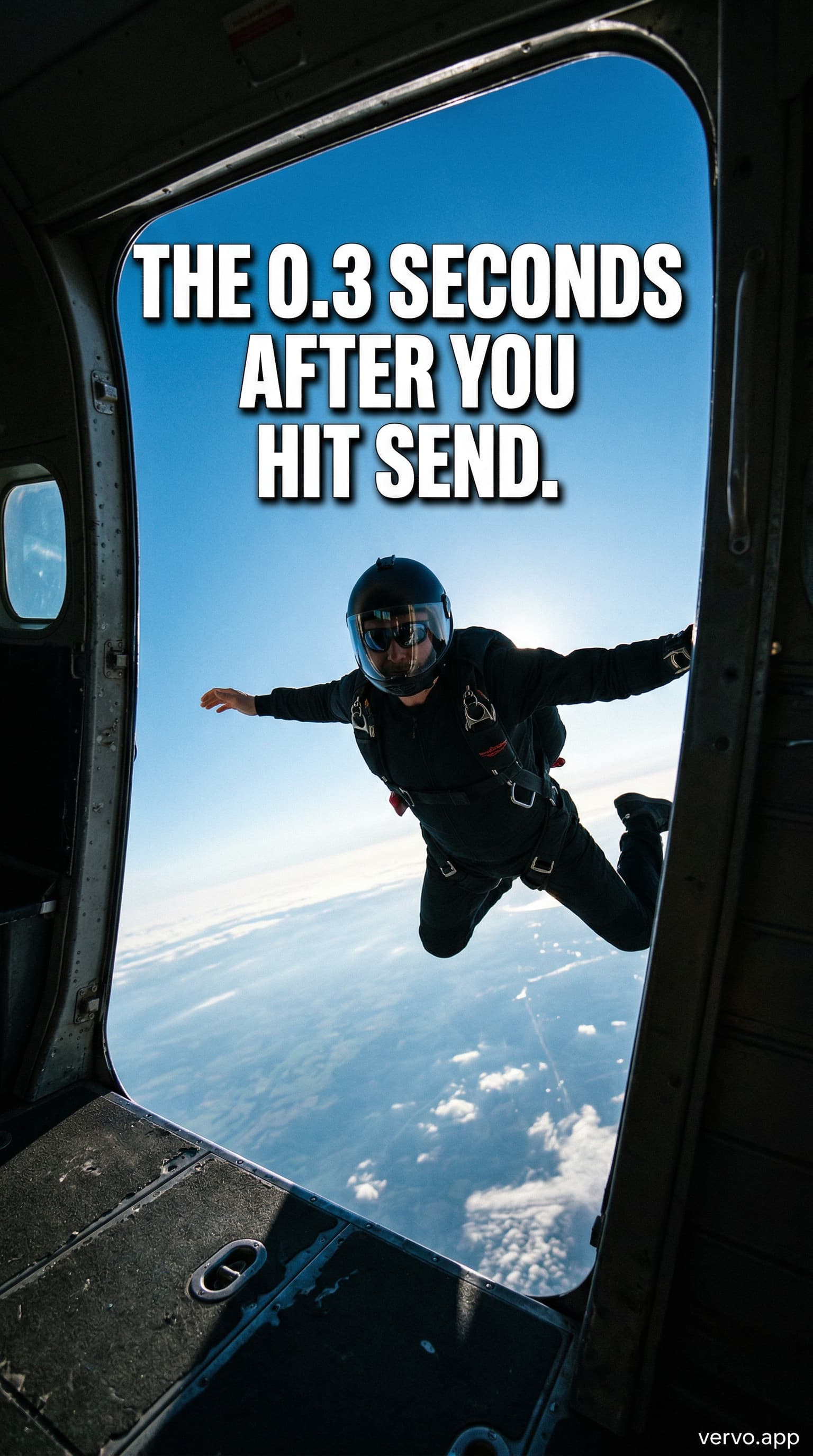
Your Brain Thinks Texting Is Dangerous
The American Psychological Association has studied what happens in your brain when you face social uncertainty. The prefrontal cortex, the part responsible for decision-making, gets overwhelmed by too many possible outcomes. Meanwhile, the amygdala starts firing threat signals.
This is why you freeze in front of a blank text field. It is not laziness. It is not indifference. It is your brain treating a text message like a survival decision.
In-person conversations do not trigger this response as strongly because they happen in real time. You do not have thirty minutes to catastrophize about the perfect word choice. You just talk. And it is usually fine.
Texting removes the time pressure and replaces it with infinite time to second-guess. That sounds like a gift. It is actually a trap.
The Skydiving Arc of Every Scary Text
Every skydiver describes the same emotional arc. Fear at the door. Freefall panic. Gradual calm. Then euphoria.
Every scary text follows the same pattern.
Stage 1: Standing at the Door
You have the draft ready. You know what you want to say. But you keep finding reasons not to send it. Maybe the timing is wrong. Maybe you should wait until tomorrow. Maybe you should rewrite it one more time.
This is the moment at the open plane door. Your legs feel heavy. Your brain says wait.

The door is already open. The draft is already written. The only thing between you and relief is one small step forward.
Stage 2: The Jump
There is a moment in skydiving when your body has left the plane and your brain has not caught up yet. That is exactly what hitting send feels like. Pure freefall. No take-backs. Just you and gravity and whatever happens next.

The good news is that the landing is almost always softer than you think. Research on texting anxiety shows that people consistently overestimate the negative consequences of sending honest messages. The catastrophe your brain predicted almost never happens.
Stage 3: The Ride
Once you commit, something shifts. The fear transforms into something else. Not comfort exactly. More like momentum. You are in the conversation now. The hard part is behind you.
This is what surfers describe inside the barrel. Terrifying and beautiful at the same time. The conversations you avoid are the ones that matter most.

Stage 4: The Reply
Then the cord catches. The reply comes in. And almost every time, it is better than the disaster your brain predicted.

This is not optimism. This is data. Studies on interpersonal communication consistently find that people underestimate how positively others will respond to genuine vulnerability. Your brain is calibrated for threats, not for connection.
Stage 5: The View
On the other side of the scary text is the view. The relationship that gets deeper. The conversation that finally happens. The weight that lifts off your chest.

Nobody climbs a mountain for the climb. They climb for what they see at the top. The hard conversation, the vulnerable text, the honest reply. Those are the climb. The view is always worth it.
Stage 6: The Peace
The freefall is over. The parachute is open. The world is quiet.
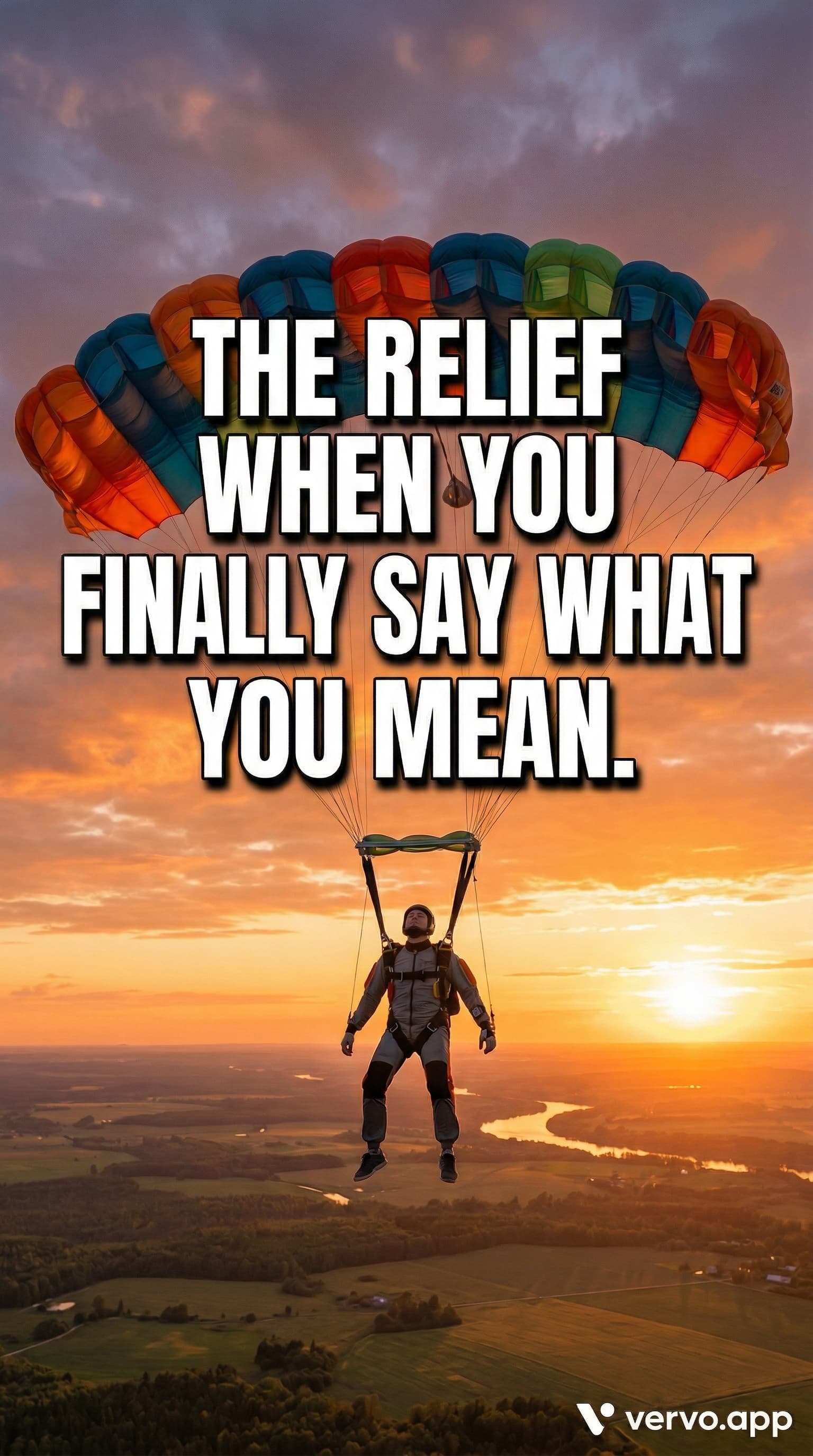
This is the feeling after you send the text you have been holding inside for weeks. No more rehearsing. No more rewriting. No more carrying it around. Just peace.
Why the Safe Reply Is the Dangerous One
Most people think the safe reply protects them. Short. Noncommittal. Carefully worded to avoid any risk.
But the safe reply is actually the dangerous one. It protects you from rejection while guaranteeing disconnection. Safe replies get safe responses. The conversation stays shallow. The relationship stays stagnant. Nobody gets hurt, but nobody gets closer either.
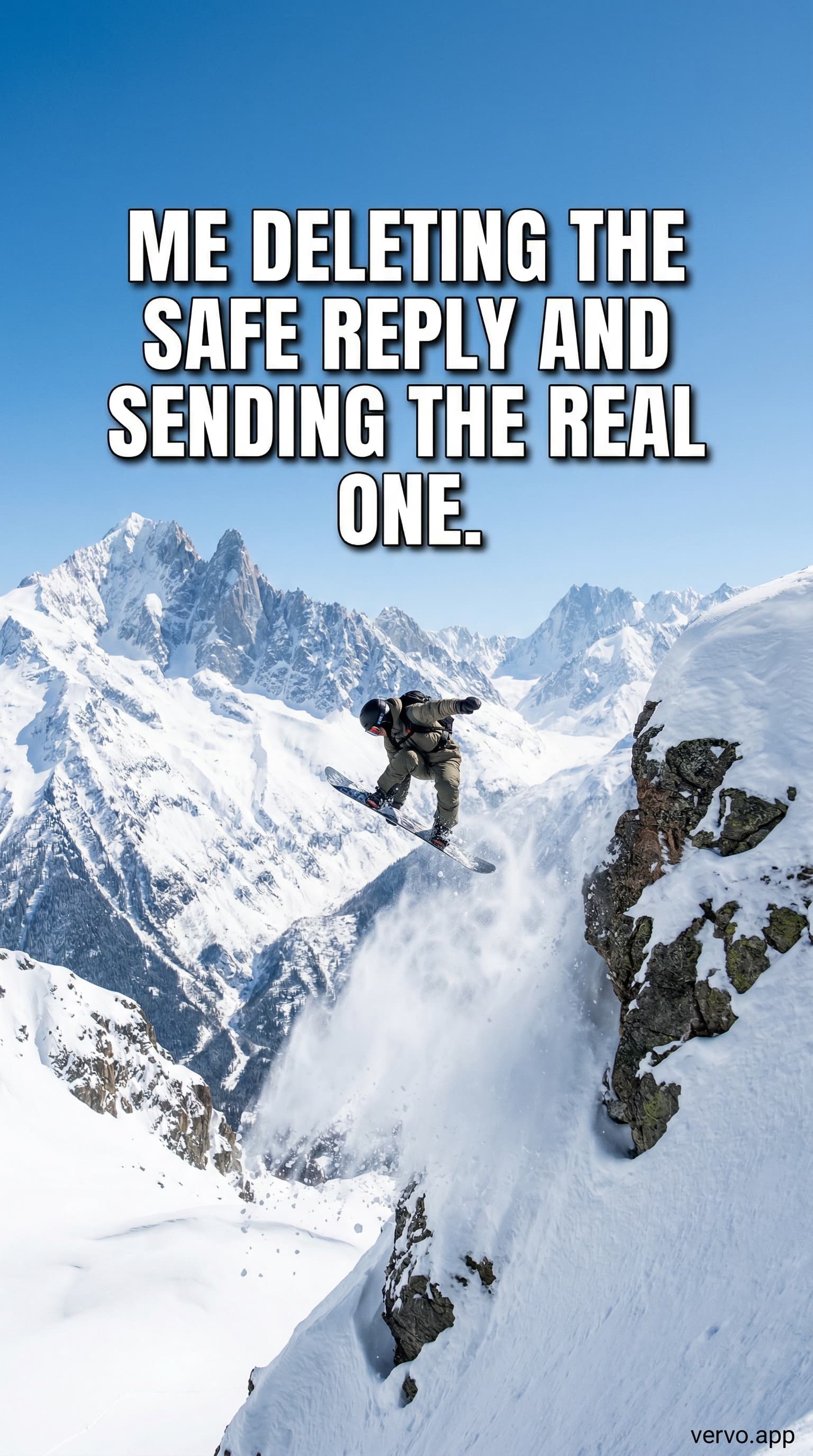
The bold reply is the one that builds something. It is the cliff drop instead of the groomed run. It is scarier, but it is where connection actually happens.
How to Build Texting Courage
You do not need to become fearless. Every skydiver is scared at the door. The difference is they jump anyway.
Here are three rules that make it easier.
The 80% Rule. If the text is 80% right, send it. Perfectionism is the enemy of connection. Nobody reads your text with a red pen. They read it with their heart.
The Two-Second Rule. When you feel the urge to reply honestly, do it within two seconds. Before your brain starts drafting alternatives. Before overthinking kicks in. The first instinct is almost always the right one.

The "What If It Goes Well" Rule. Your brain automatically runs worst-case scenarios. Force it to run the best-case scenario instead. What if they laugh? What if they agree? What if they feel the same way? The best case is just as likely as the worst case. Usually more likely.
The Text You Are Afraid to Send
You already know which text it is. You have been thinking about it while reading this article.
It is sitting in your drafts, or in your head, or in the notes app where you type things you are not ready to send yet. You know the words. You know the person. You know the reason.
The door is open.
Everyone who ever jumped was scared first.

If writing the text is the hard part, Vervo can help. Screenshot the conversation, and it gives you three reply options in your voice. No more staring at the blank field. No more drafting and deleting. Just pick the one that feels right and jump.
Sources
- American Psychological Association. "Stressed in America: The Psychology of Choice Overload." APA Spotlight, Issue 160, 2024.
- Springer. "Social Anxiety and Instant Messaging: The Role of Text-Based Communication in Anxiety Expression." Motivation and Emotion, 2025.
- Montclair State University. Yi Luo et al. "Gen Z Anxiety and Digital Communication Patterns." 2025.
- Uswitch. "Digital Communication Preferences Survey." 2,000 respondents, 2024.