47% of Gen Z Say Texting Anxiety Keeps Them Single. Here Is What That Looks Like.
Nearly half of Gen Z singles say texting anxiety is the reason they are still single. The science behind why your phone feels like a slot machine and your drafts folder is a graveyard.

You matched with someone three days ago. The conversation started strong. Then they asked a real question. Something that required more than "haha yeah." Something that required you to be honest.
You typed a reply. Deleted it. Typed another one. Deleted that too. Opened Instagram. Came back. Typed a third version. Screenshotted it and sent it to your group chat. Got four conflicting opinions. Closed the app entirely.
That was Tuesday. It is now Friday. The match expired.
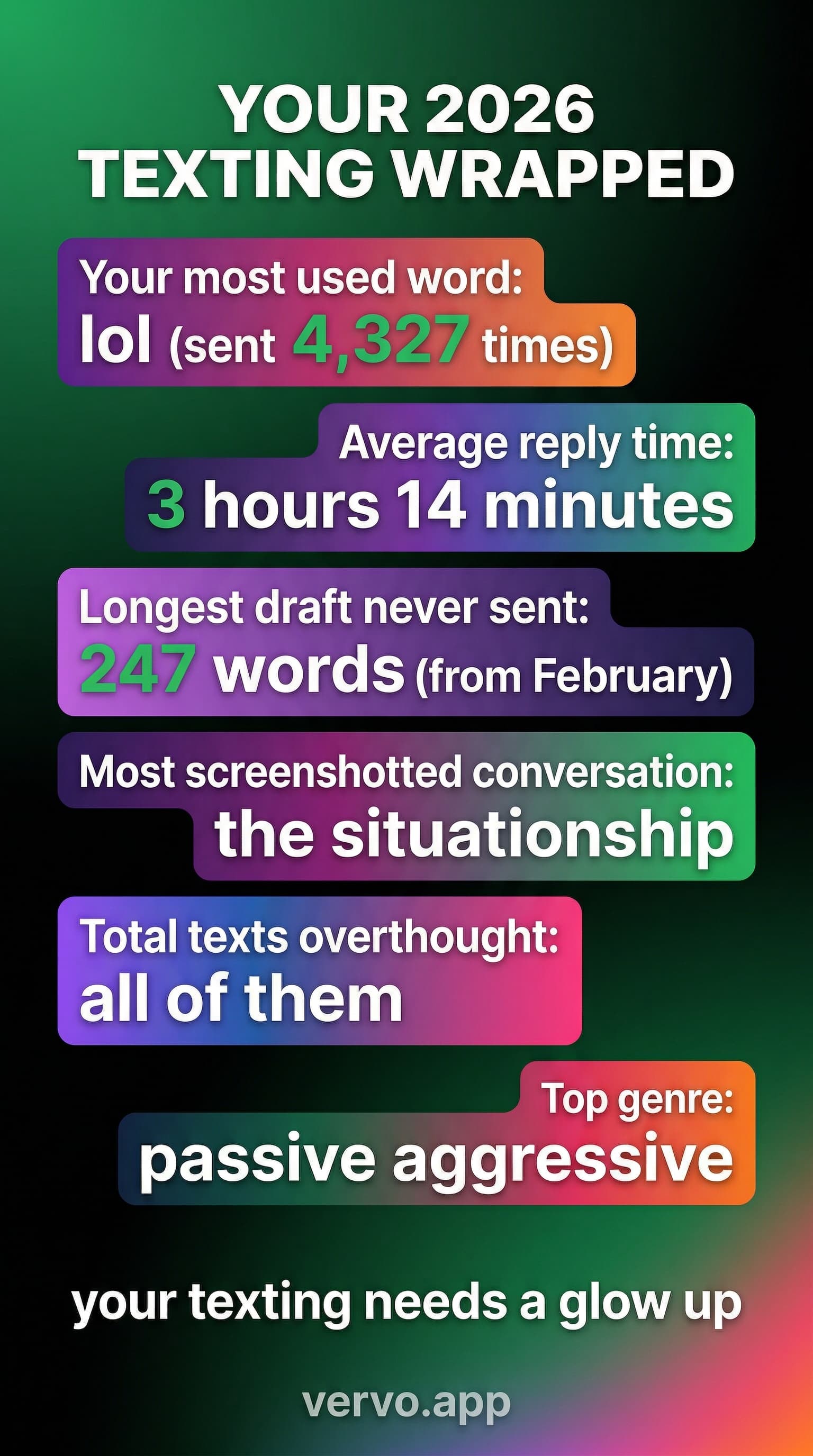
This is not a personality flaw. This is a pattern. And according to recent data, 47% of Gen Z singles say this exact pattern is the reason they are still single.
The Numbers Are Worse Than You Think
A 2026 study on dating and communication found that 47% of Gen Z singles identify texting anxiety as the specific barrier keeping them from forming relationships. Not a lack of interest. Not a lack of matches. The inability to type words into a phone and press send.
The same research found that the average person spends 40 minutes overthinking a single important text reply. That is longer than most therapy sessions. And 73% of people have abandoned a draft message entirely rather than sending something imperfect.
A separate Hinge study confirmed the pattern from the dating side. 84% of Gen Z daters want deeper connections. But they are 36% more hesitant than millennials to start meaningful conversations. 48% of men hold back emotionally to avoid coming on too strong. 43% of women wait for the other person to go first.
The result is two people staring at their phones, both wanting to say something real, both waiting for the other person to go first. Nobody goes first. The connection dies.
Your Phone Is a Slot Machine
The reason texting triggers so much anxiety has roots in neuroscience, not weakness.
Every notification your phone sends triggers a small dopamine release. The same neurotransmitter involved in gambling, drug use, and falling in love. Your brain does not distinguish between a text from your crush and a pull on a slot machine lever. Both create anticipation. Both deliver unpredictable rewards. Both train your brain to keep checking.
Social media platforms and messaging apps are designed using variable ratio reinforcement. The same mechanism that makes slot machines addictive. You do not know if the next notification will be exciting or mundane, so you keep checking. Americans spend four to five hours per day on their phones. That is more than a full workday every week spent pulling the lever.
The crisis is not that Gen Z is lazy or emotionally stunted. The crisis is that the tools they use to communicate are engineered to create dependency while simultaneously making genuine communication harder.
The Dopamine Trap of Texting
Here is how the cycle works.
Stage 1: The notification. Your phone buzzes. Dopamine spikes. Your brain says this could be important. You check immediately.
Stage 2: The read. You read the message. If it requires a real response, your brain shifts from reward mode to threat mode. The American Psychological Association calls this choice overload. The blank text field represents infinite possible responses. Infinite options equals paralysis.
Stage 3: The draft. You start typing. The dopamine from the notification has faded. Now you are operating on cortisol. Stress. What if they misread your tone? What if you come on too strong? What if you do not come on strong enough? You delete what you typed.
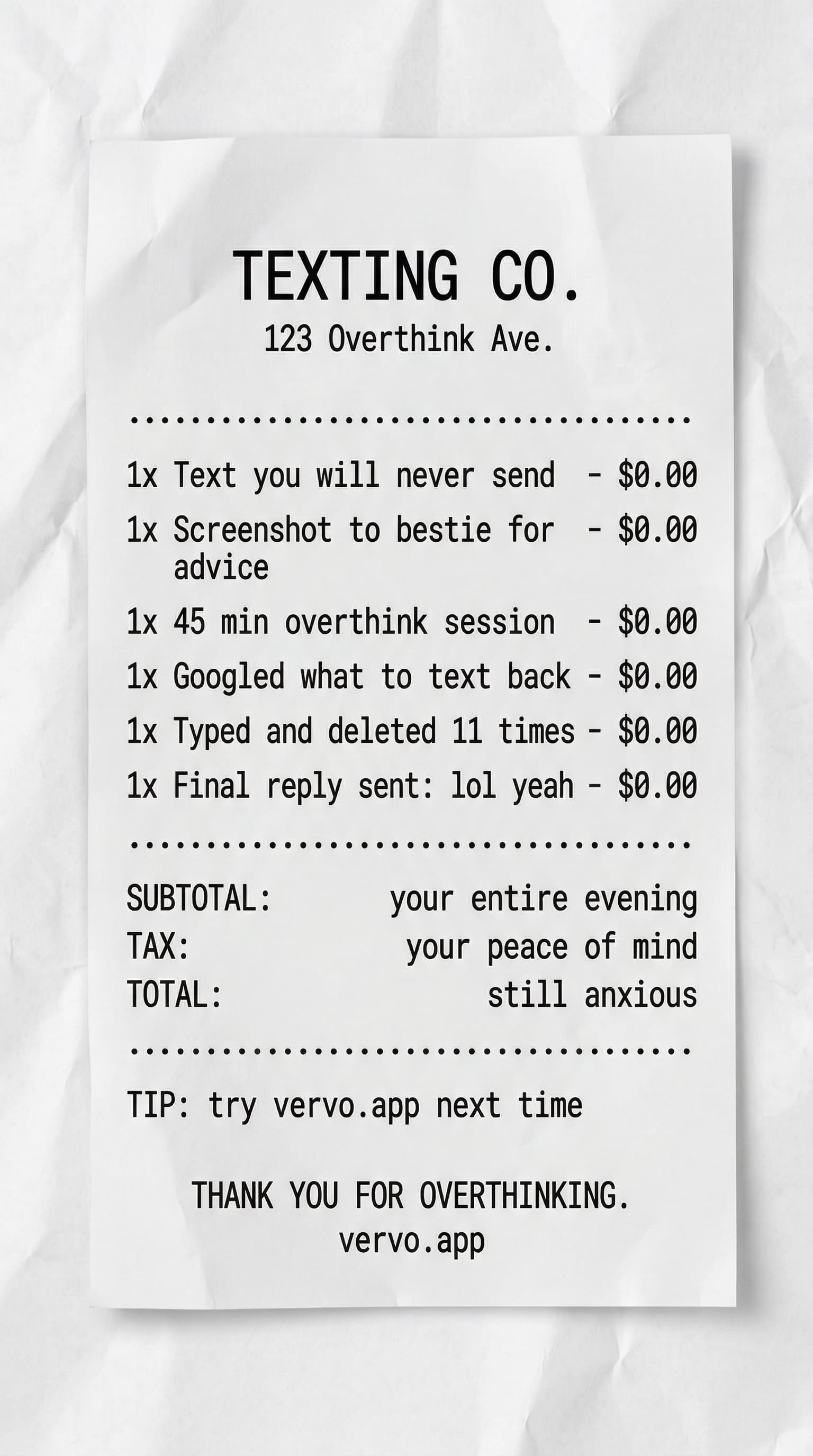
Stage 4: The spiral. You close the app. Tell yourself you will reply later when you have the right words. Later becomes tomorrow. Tomorrow becomes never. The silence itself becomes the message. And the anxiety compounds because now you have to explain why you disappeared.
Stage 5: The avoidance. You convince yourself they probably did not care that much anyway. You open a different app. The algorithm serves you content designed to trigger more dopamine. The cycle restarts. The text stays unsent.
This is not overthinking. This is a neurological feedback loop. Your phone is optimized for engagement, not connection. The two are opposites.
What 40 Minutes of Overthinking Actually Costs
Forty minutes does not sound like much until you multiply it.
One important text per day at 40 minutes each equals 4.6 hours per week spent frozen in front of a keyboard. That is 240 hours per year. Ten full days of your life spent not saying what you mean.
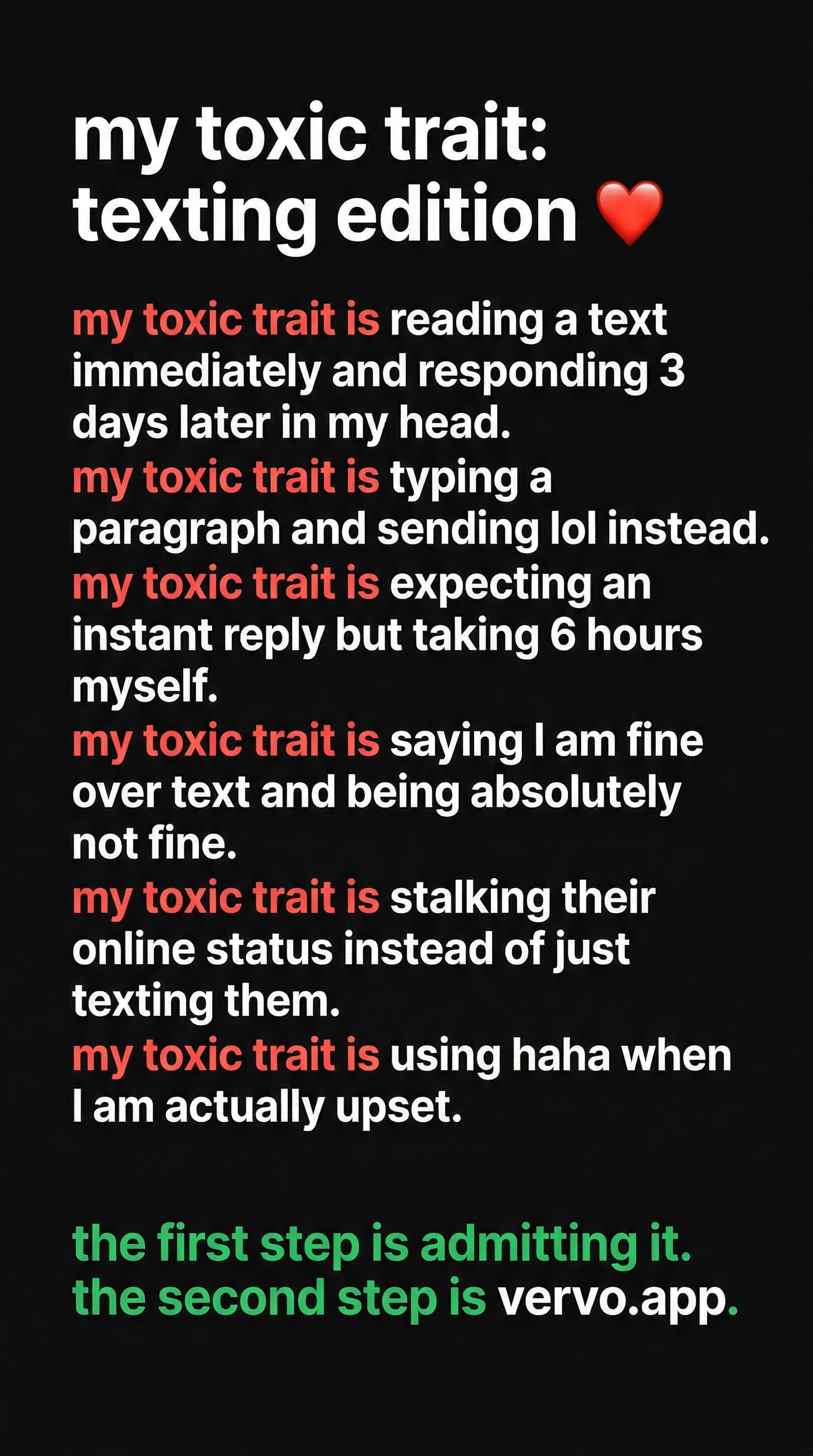
Now consider what those 240 hours could have been. Conversations that build trust. Replies that create inside jokes. Vulnerable texts that deepen relationships. All of it replaced by silence and second-guessing.
The research from Montclair State University on Gen Z and digital communication found that the generation most comfortable with technology is also the generation most paralyzed by it. They grew up with phones in their hands. They can navigate any app, edit any video, build any aesthetic. But typing "I like you" to someone they actually like? That requires a 45-minute group chat consultation and three deleted drafts.
54% of Singles Are Now Using AI to Text
Here is where the data gets interesting. According to CNN and an Arrows survey of 1,008 U.S. singles, 54% have used AI dating tools for some part of dating in 2026. That number was 21% just one year prior. A 157% increase in twelve months.
Gen Z is outsourcing the hard part. Not because they do not care. Because they care too much. The stakes feel so high that they would rather let an algorithm draft the first version than risk saying the wrong thing themselves.
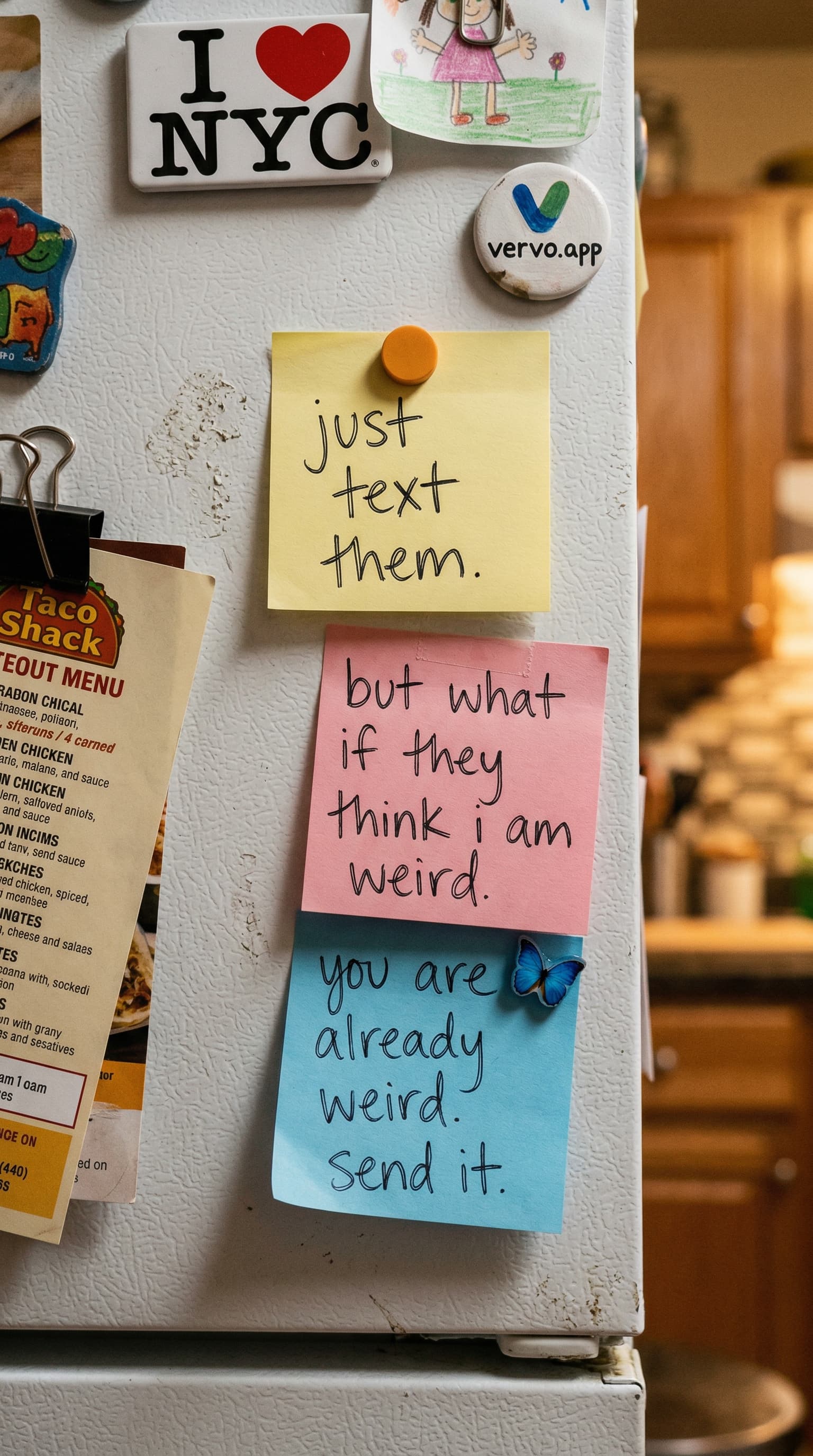
Researchers at CNN note that while AI tools can help break the initial freeze, experts warn about the long-term effects. If a generation already struggling with social anxiety starts relying on AI for emotional conversations, the muscle for authentic communication atrophies further.
The solution is not to avoid AI tools entirely. The solution is to use them as a starting point, not a replacement. A tool that gives you three reply options is different from a tool that speaks for you. The first builds confidence. The second replaces it.
Why the "Just Be Yourself" Advice Fails
Every article about texting anxiety eventually says "just be yourself." This advice is useless for three reasons.
First, "yourself" in a text conversation is not the same person as "yourself" in person. In person, your smile, tone, body language, and timing all carry meaning. In text, you have twenty words and a punctuation mark. Packing your entire personality into that format is an impossible task.
Second, "being yourself" assumes you know what to say. Most texting anxiety is not about filtering the wrong things out. It is about generating anything at all. The blank field paralyzes you before you can get to the part where you decide what is authentic.
Third, the advice ignores the biological reality. Your prefrontal cortex is overwhelmed by options. Your amygdala is firing threat signals. Telling someone in that state to "just be yourself" is like telling someone having a panic attack to "just calm down." It is technically correct and practically useless.
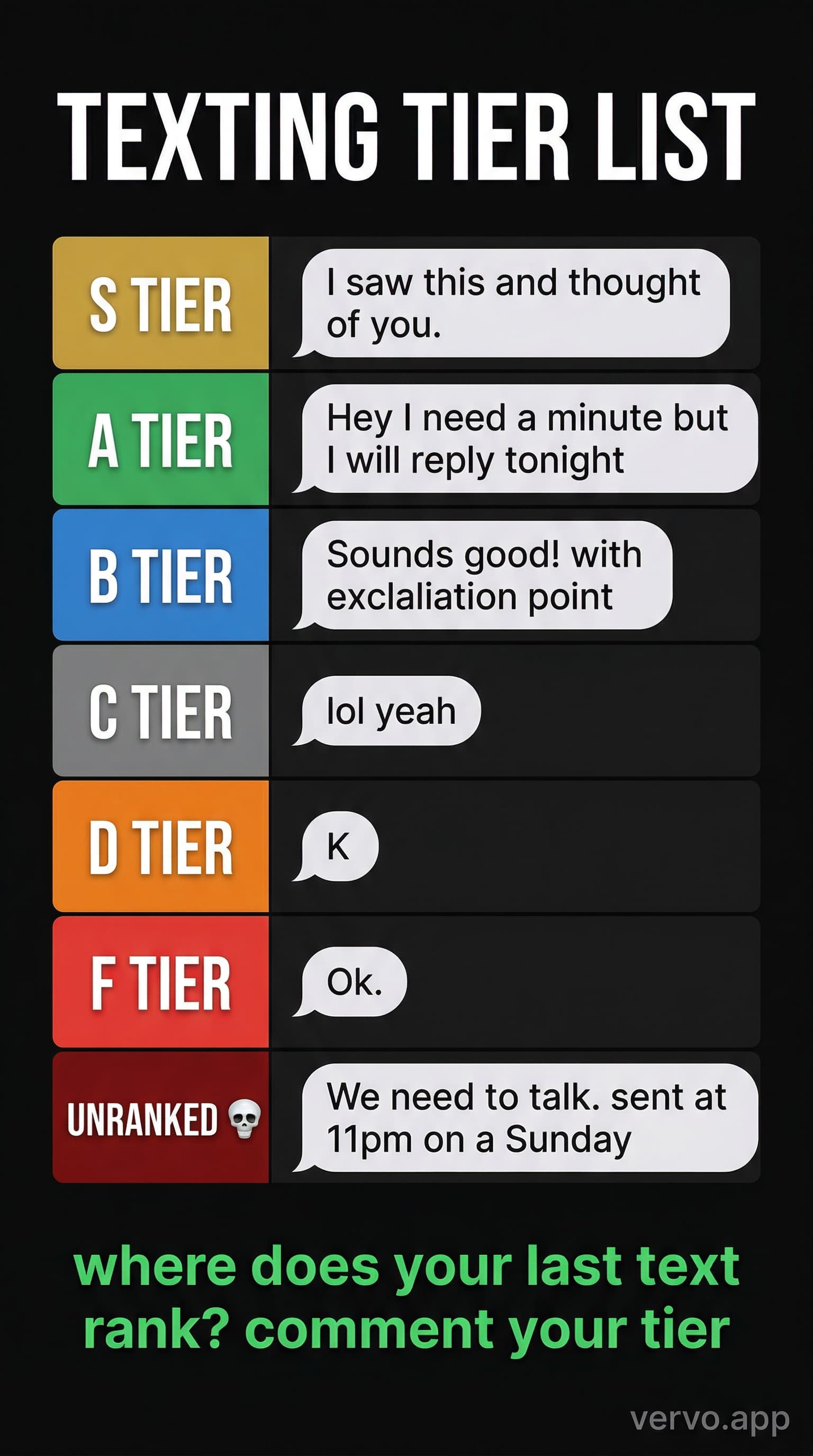
What Actually Works
The research points to three interventions that reduce texting paralysis.
Reduce options. The APA research on choice overload confirms that fewer choices lead to faster, more satisfying decisions. Instead of facing an infinite blank field, having two or three starting points eliminates the freeze. This is why reply suggestion tools work. They do not write the text for you. They give your brain a starting point so it can stop generating options from zero.
Set a time limit. The 40-minute average exists because there is no natural deadline. In-person conversations have built-in time pressure. You respond within seconds because the other person is standing there. Texting has no equivalent pressure, which means the overthinking expands to fill all available time. Set a two-minute limit. Whatever you have at the end of two minutes is good enough. It almost always is.
Lower the stakes. Research from Springer on social anxiety and instant messaging found that people consistently overestimate negative outcomes from sending honest messages. The catastrophe you predict almost never happens. The "worst case" you fear is usually a mild awkwardness that both people forget by the next day. The real worst case is never sending anything at all.
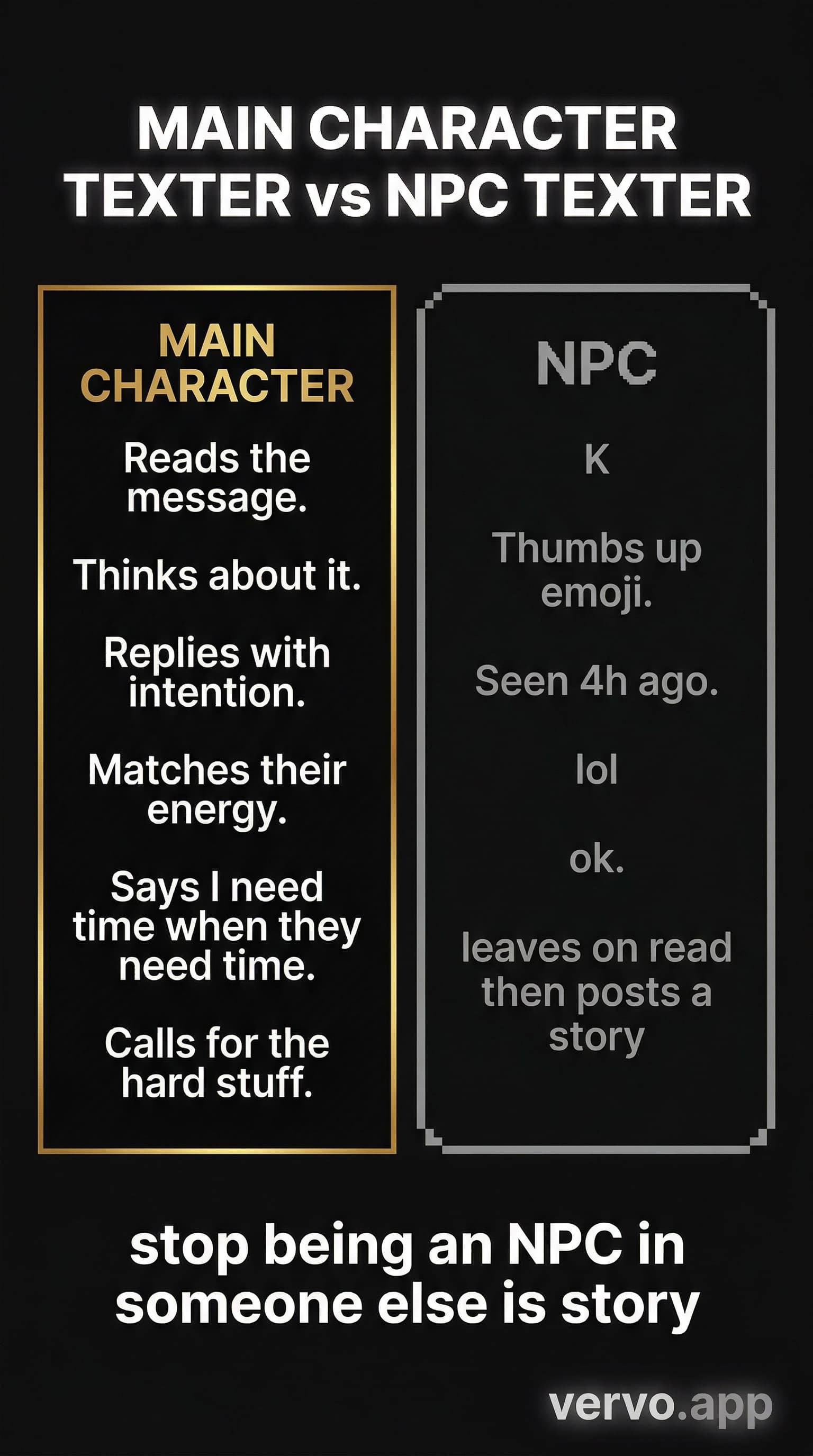
The Text You Are Not Sending Right Now
You know which one it is. You have been thinking about it since the second paragraph of this article.
It is sitting in your drafts, or in your head, or in the notes app where you type things you are not ready to send. The person. The words. The reason. You have all three. The only thing missing is permission.
Here it is. The text does not need to be perfect. It needs to be sent. The 47% statistic exists because millions of people are choosing silence over imperfection. That is the real risk. Not saying the wrong thing. Saying nothing at all.
If the blank text field is what freezes you, Vervo can help. Screenshot the conversation, get three reply options in seconds, pick the one that sounds like you, and send it. The 80% rule applies. If it is mostly right, it is ready.
The draft has been sitting there long enough. Send it.
Sources
- Barchart / Indiana Headlines. "47% of Gen Z Say Texting Anxiety Keeps Them Single as AI Dating Reply Apps See Record Adoption." 2026.
- CNN. "Gen Z Is Outsourcing Hard Conversations to AI. Why It Matters." March 7, 2026.
- Arrows Survey. "AI Dating Tools Usage Among 1,008 U.S. Singles." 2026.
- Hinge. "Gen Z Dating Trends: Communication Hesitancy Study." 2026.
- American Psychological Association. "Stressed in America: The Psychology of Choice Overload." APA Spotlight, Issue 160, 2024.
- Crisis Text Line. "What is a Dopamine Detox? The Truth About Dopamine Addiction and Overstimulation." March 26, 2026.
- Momentous Institute. "The Effect of Cell Phones on Dopamine in the Brain." 2025.
- Springer. "Social Anxiety and Instant Messaging." Motivation and Emotion, 2025.
- Montclair State University. Yi Luo et al. "Gen Z Anxiety and Digital Communication Patterns." 2025.
- Fox News. "Gen Z Opting for Texting Due to 'Phobia' of Phone Calls, Research Reveals." 2026.